
Your UI Passed. Your Customer Still Faced the Bug.
A junior QA engineer once proudly said,
“I completed UI testing. Everything looks perfect.”
I asked him,
“Did you test the APIs?”
He replied,
“No. If the UI works, the API should also work, right?”
That sentence reminded me why so many production bugs escape testing.
The UI is just the front door.
The real business logic lives behind it—in the APIs.
A beautiful UI can easily hide a broken backend.
After 15 years in testing, I’ve learned one simple truth:
Many of the most expensive production bugs are invisible in the UI.
Case Study 1 – The Wrong Customer Received the Data
Imagine you’re testing a banking application.
You search for Customer 101.
The UI displays the correct account details.
Everything looks perfect.
Now imagine another application calls the same API directly.
GET /customers/102Instead of returning Customer 102, the API mistakenly returns Customer 101.
The UI never exposed this bug because it always requested the correct customer.
The API had a serious data-mapping issue.
UI testing passed.
Production failed.
Lesson: Never assume the UI covers every API scenario.
The UI Doesn’t Show Everything
Think about it.
The UI only displays what designers decided to show.
But the API may return much more.
Example:
{
   "name":"John",
   "email":"john@email.com",
   "salary":150000,
   "isAdmin":true,
   "passwordHash":"XYZ123..."
}
The UI only shows:
John
john@email.com
Looks harmless.
But the API exposed confidential information.
No UI test would ever detect this.
Only API testing would.
Case Study 2 – The Discount That Never Applied
An e-commerce application had this flow:
- Add product
- Apply coupon
- Place order
The UI calculated the discounted price correctly.
Everything looked perfect.
But when the order was submitted, the Checkout API ignored the discount.
Customers were charged the full amount.
Why didn’t UI testing catch it?
Because the UI simply displayed the calculated value.
The backend never validated it.
Always verify what the API actually processes—not just what the UI displays.
APIs Can Be Called Without the UI
This is something every junior tester should remember.
The UI is optional.
The API is not.
Anyone can call an API using:
- Postman
- Mobile App
- Another Microservice
- Third-party Integrations
- Automation Scripts
If the API is broken, every client is broken.
That’s why API testing is often more important than UI testing.
What UI Testing Usually Misses
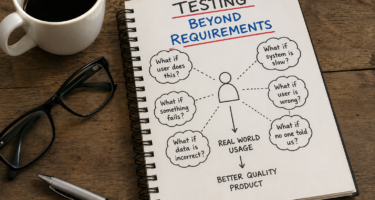
Whenever I test an API, I don’t stop after checking the response.
I ask myself,
“What could happen even if the UI looks correct?”
Here’s my checklist.
Data Validation
- Is the correct data returned?
- Are any fields missing?
- Are unexpected fields exposed?
Security
- Can another user access my data?
- Is authentication working?
- Are tokens validated properly?
Business Logic
- Is the calculation correct?
- Was the discount applied?
- Was the inventory updated?
Database Validation
- Was the record actually inserted?
- Was old data updated?
- Were audit logs created?
Error Handling
- Invalid request
- Missing parameters
- Invalid token
- Duplicate request
The UI rarely checks all of these.
Case Study 3 – Two Users, One Product
A shopping application had only one laptop left in stock.
Customer A clicked Buy Now.
Customer B clicked Buy Now at almost the same time.
The UI for both users showed:
Order Successful
But the inventory had only one laptop.
The API accepted both requests.
One customer received the product.
The other received an apology email two days later.
This bug only appears when APIs are tested with concurrent requests.
No normal UI testing would expose it.
Think Like a Backend Tester
When I teach junior QA engineers, I tell them,
Don’t ask,
“Did the screen look correct?”
Ask,
- Did the API return the correct data?
- Did the database update?
- Was the business rule followed?
- Was sensitive information protected?
- Can someone misuse this endpoint?
That’s how backend testers think.
Final Thoughts
UI testing tells you whether users can perform an action.
API testing tells you whether the system performed the action correctly.
A passing UI test doesn’t always mean a healthy application.
The next time your UI automation says,
“All Tests Passed.”
Pause for a moment and ask yourself,
“What’s happening behind the screen?”
Because that’s where the bugs that matter are usually hiding.
And the best testers know that real quality isn’t just what users see…
It’s also what they never get to see.

Leave a Reply